Steps
How to make it
Prep 15 min · Cook 20 min
- Rinse uncooked white rice 150 g and cook with 360 ml water (or broth) until grains are separate and slightly chewy. Fluff with a rice paddle to release steam and keep warm.
- Marinate marbled beef slices 150 g with 1 tbsp Korean sesame oil and a little salt for 10 minutes. Julienne carrot 30 g, cut spinach 50 g into sections, and rinse soybean sprouts and wood ear mushrooms.
- Bring a small pot of water to a boil. Blanch spinach 30 seconds, drain, and squeeze dry; blanch soybean sprouts 1 minute and drain; blanch sliced wood ear mushrooms 1 minute. Set each aside separately.
- Heat 1 tbsp Korean sesame oil in a skillet over medium heat. Stir-fry beef until cooked and lightly caramelized (about 2 minutes) and remove. In the same pan, stir-fry carrot (about 1 minute) and other vegetables in sequence, seasoning each lightly with salt and a little sesame oil. Set aside separately.
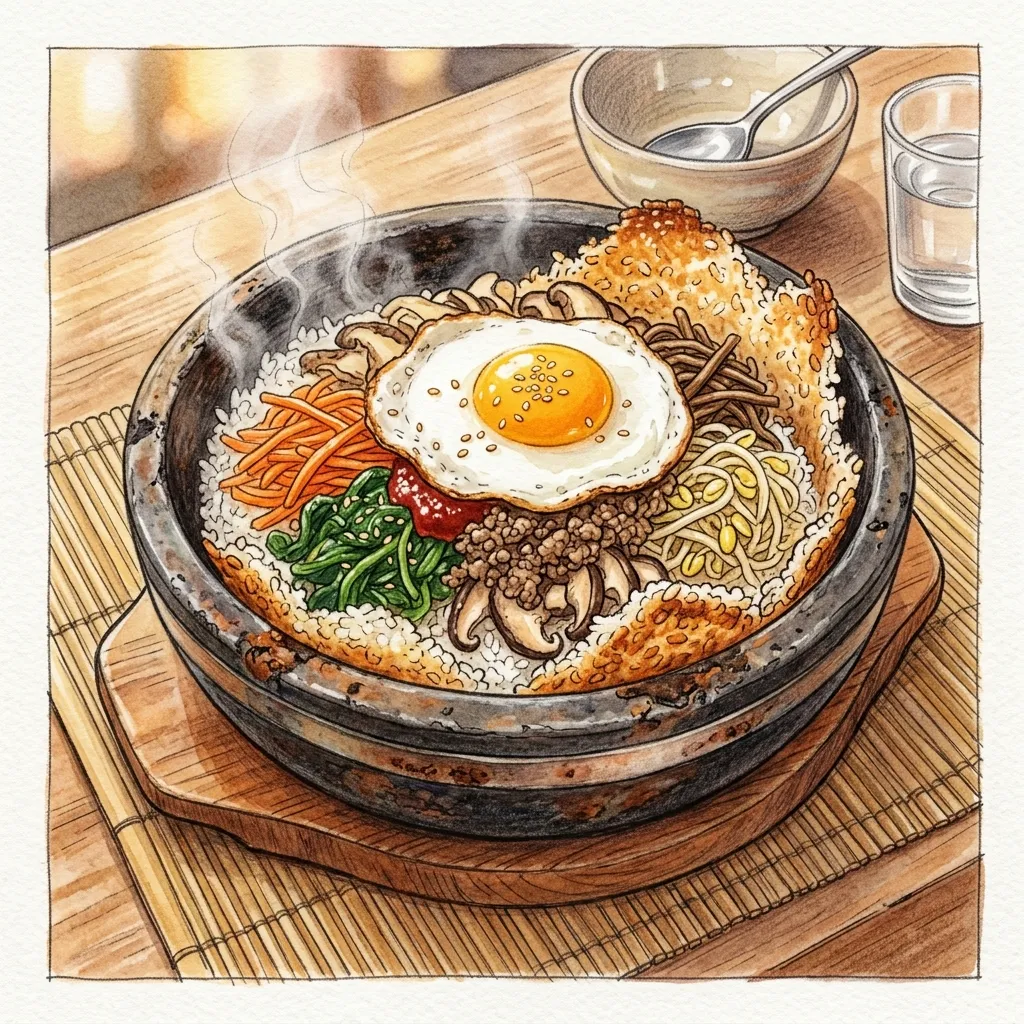
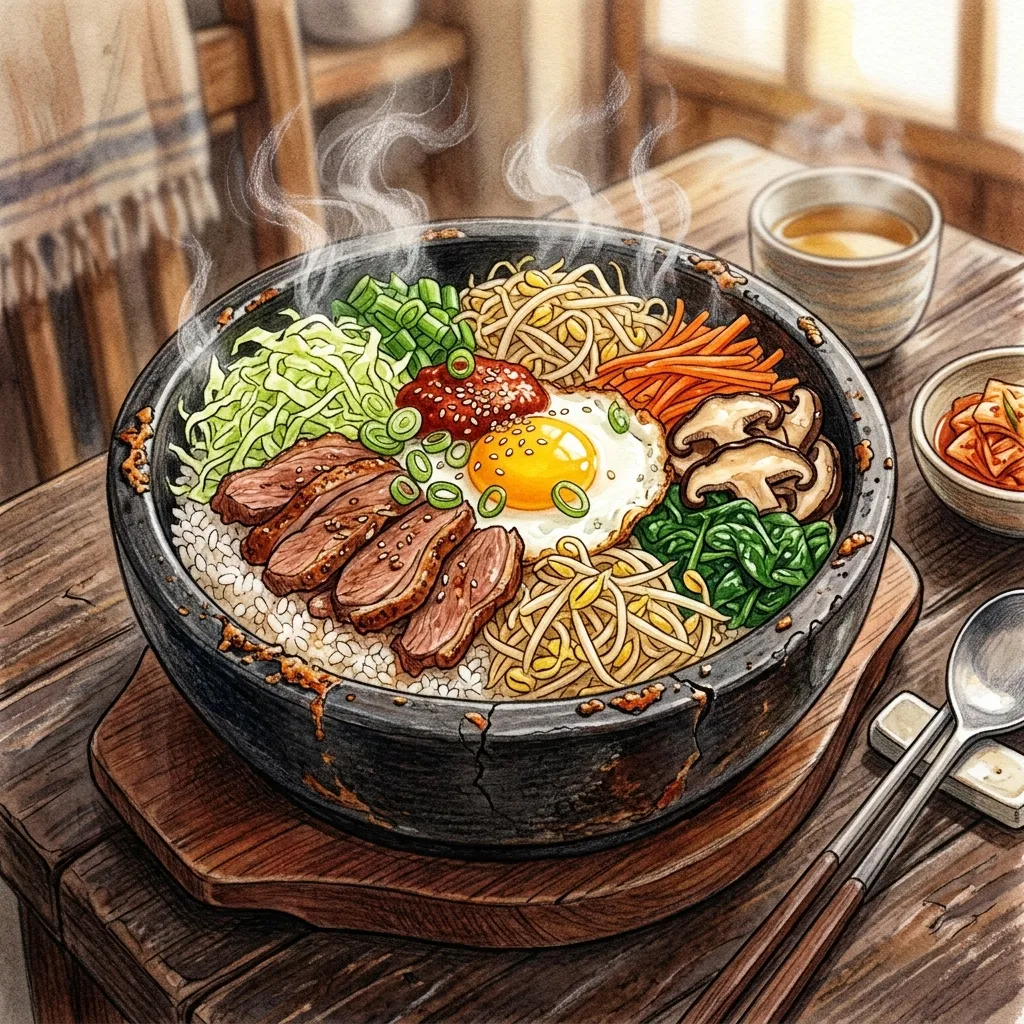
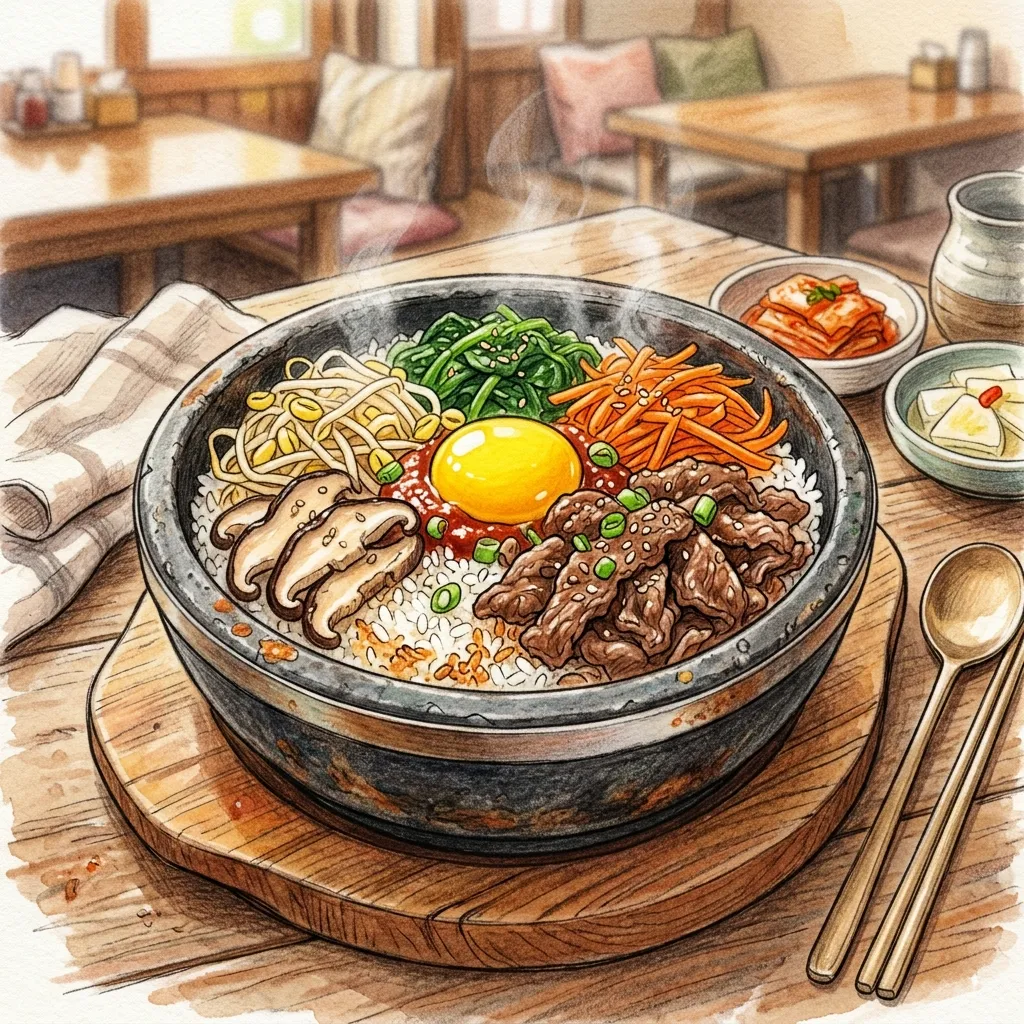
- Brush the stone pot evenly with 1–2 tbsp Korean sesame oil, spread hot rice and press flat, arrange meat and vegetables by color, leaving a center space.
- Crack in 1 egg and heat the stone pot over medium 3–5 minutes until you hear sizzling and smell toasted rice crust (nurungji).
- Before serving, drizzle 1 tbsp Korean chili paste (gochujang) and a pinch of sesame seeds. Mix from the edge inward with a spoon; if no stone pot, mix in a bowl and enjoy.